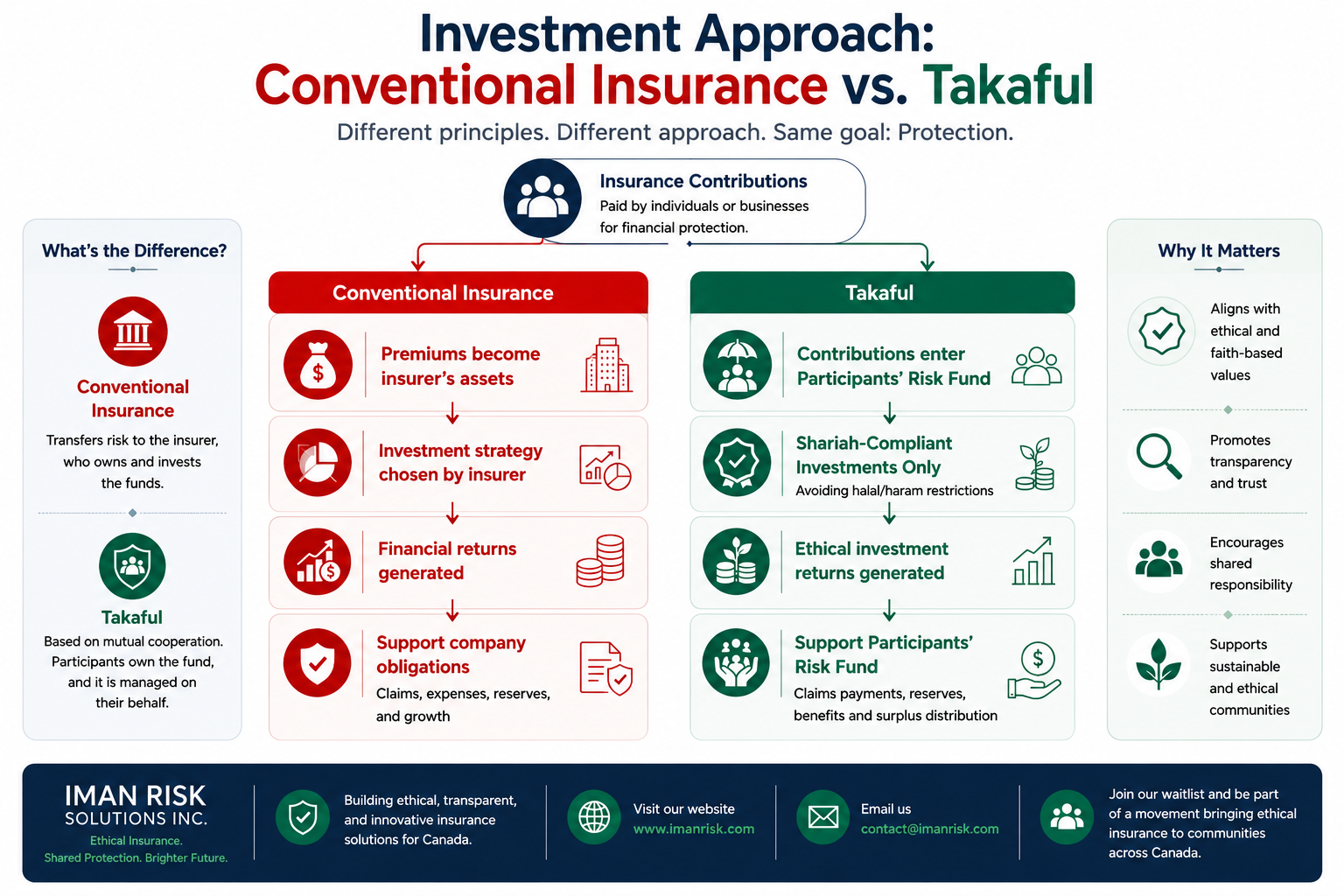
Most people purchase insurance to protect themselves against unexpected events. However, an important question is often overlooked:
What happens to the money collected after an insurance premium or Takaful contribution is paid?
Both conventional insurance and Takaful are designed to provide financial protection against defined risks. However, their underlying structures can differ in areas such as risk ownership, fund governance, contractual relationships, and investment principles.
Understanding these differences is particularly important when examining how insurance-related funds may be invested and how Takaful incorporates Shariah governance into its financial structure.
How Conventional Insurance Invests Premiums
Under a conventional insurance arrangement, the insurer generally assumes the insured risk in exchange for a premium. Premium income becomes part of the insurer's financial resources and is managed within the insurer's regulatory, actuarial, investment, and solvency framework.
Insurers typically maintain investment portfolios to support claims obligations, reserves, capital requirements, liquidity needs, and long-term financial sustainability.
Subject to applicable regulation and the insurer's investment policies, portfolios may include:
- Government securities;
- Corporate bonds;
- Equities;
- Real estate;
- Money-market instruments;
- Other permitted financial assets.
Investment decisions are generally governed by financial, actuarial, risk-management, solvency, and regulatory considerations.
How Takaful Investment Is Structured
Takaful introduces an additional dimension to fund management: investments associated with a Shariah-compliant Takaful arrangement are expected to comply with applicable Shariah principles and governance requirements.
Participants contribute under a cooperative risk-sharing structure. Depending on the particular Takaful model, contributions may be allocated between different components, including a Participants' Risk Fund and applicable operator fees or other permitted allocations.
Funds available for investment must therefore be managed within the financial and regulatory requirements of the arrangement while also respecting its approved Shariah framework.
For a broader explanation of the underlying structure, see our How Takaful Works guide.
What Is Shariah-Compliant Investment?
Shariah-compliant investment refers to investment activity structured according to Islamic financial principles.
This involves considering both the economic activity being financed and the financial structure through which the investment is made.
A Shariah-compliant investment framework generally seeks to avoid prohibited activities and financial arrangements involving concepts such as:
- Riba — prohibited interest-based transactions;
- Maisir — gambling or games of chance;
- Gharar — excessive contractual uncertainty;
- Alcohol-related activities;
- Pork-related products;
- Gambling businesses;
- Adult entertainment;
- Other activities determined to be inconsistent with the applicable Shariah framework.
Shariah-compliant investing is therefore not simply a list of industries to avoid. It can also involve reviewing financial structures, contractual arrangements, business activities, and other relevant compliance criteria.
What Types of Assets Can a Takaful Fund Invest In?
The specific investment portfolio of a Takaful fund depends on the jurisdiction, applicable insurance regulation, investment policy, liquidity requirements, risk tolerance, product structure, and Shariah governance framework.
Depending on those requirements, Shariah-compliant investment opportunities may include appropriately structured assets such as:
- Sukuk and other eligible Islamic financial instruments;
- Shariah-screened equities;
- Permissible real-estate investments;
- Shariah-compliant investment funds;
- Other assets approved under the applicable investment and governance framework.
Financial sustainability remains essential. Shariah compliance does not remove the need for prudent investment management, diversification, liquidity, capital protection, or regulatory compliance.
Why Investment Governance Matters in Takaful
Investment governance matters because the assets supporting a Takaful arrangement may ultimately contribute to the financial strength of the participant fund and its ability to meet eligible claims and other obligations.
A responsible investment framework therefore needs to consider several objectives simultaneously:
- Preserving appropriate liquidity;
- Managing investment risk;
- Supporting claims obligations;
- Maintaining appropriate reserves;
- Complying with insurance and investment regulation;
- Following the applicable Shariah governance framework;
- Supporting the long-term sustainability of the Takaful arrangement.
The Role of Shariah Governance
Where an insurance arrangement is represented as Shariah-compliant Takaful, governance is an important part of maintaining the integrity of that representation.
Depending on the institutional structure, qualified Shariah advisers or a Shariah supervisory function may review matters such as:
- The Takaful contractual model;
- Contribution and Tabarru' structures;
- Operator remuneration;
- Investment policies and permitted assets;
- Surplus and deficit treatment;
- Relevant operational practices.
The precise governance structure varies by jurisdiction and by Takaful operator.
Investment Returns and the Participants' Risk Fund
Investment income can also affect the financial position of a Takaful fund.
Depending on the contractual model and applicable governance framework, investment returns attributable to participant funds may contribute to the financial resources available within those funds.
Those resources may ultimately support claims, reserves, permitted expenses, and the overall financial sustainability of the arrangement.
After eligible claims and other obligations have been addressed, the fund may have a surplus. The treatment of that surplus depends on the Takaful model, contractual provisions, actuarial considerations, regulatory requirements, reserve needs, and governance approvals.
For a more detailed explanation, read our guide to Takaful fund management.
Key Structural Differences
The distinction between conventional insurance and Takaful extends beyond investment selection.
At a high level, the models may differ in areas such as:
- The contractual relationship between the parties;
- The treatment and governance of the risk fund;
- The mechanism used for risk sharing or risk transfer;
- The operator's remuneration structure;
- Investment requirements;
- The treatment of any participant-fund surplus or deficit;
- Shariah governance requirements in a Takaful arrangement.
These distinctions should be evaluated within the context of the particular insurance or Takaful product rather than assuming that every provider uses an identical structure.
Both Models Require Sound Financial Management
It is important not to interpret these structural differences as meaning that financial discipline matters in one model but not the other.
Both conventional insurers and Takaful arrangements require sound underwriting, claims management, reserving, investment governance, risk management, regulatory compliance, and appropriate financial controls.
The distinction is that a Shariah-compliant Takaful structure introduces additional principles and governance requirements that affect how the arrangement is designed and how eligible funds may be managed.
Why Transparency Matters
Participants increasingly expect clear information about how financial products operate.
In a Takaful context, transparency can include explaining:
- How participant contributions are allocated;
- What fees are charged;
- How the Participants' Risk Fund operates;
- How eligible claims are funded;
- What investment principles apply;
- How Shariah governance is implemented;
- How a surplus or deficit may be treated.
Clear disclosure allows participants to better understand the financial arrangement in which they are participating.
How Technology Can Improve Transparency
Modern digital platforms can make insurance and Takaful operations easier to understand and manage.
Depending on the operating model and information available to participants, digital systems can support:
- Contribution and payment records;
- Policy and coverage information;
- Claims submission and tracking;
- Broker and customer communication;
- Relevant disclosures;
- Governance and compliance workflows;
- Operational and regulatory reporting.
Technology does not replace sound insurance, actuarial, regulatory, investment, or Shariah governance. Instead, it can provide infrastructure that makes those processes more efficient, accessible, and transparent.
Iman Risk Solutions' Approach
At Iman Risk Solutions Inc., we are developing digital-first infrastructure intended to support transparent, ethical, and Takaful-aligned insurance distribution in Canada.
Our approach focuses on combining technology, customer education, broker-enabled distribution, insurer partnerships, transparent digital workflows, and appropriate governance.
Iman Risk Solutions Inc. is currently in a pre-launch and development stage and is not currently offering, selling, binding, or underwriting insurance products.
Any future Takaful offering would remain subject to appropriate insurer capacity, licensing, underwriting arrangements, regulatory requirements, product approvals, and governance.
Key Takeaway
Both conventional insurance and Takaful seek to provide financial protection, but their structures and investment frameworks can differ.
In a Shariah-compliant Takaful arrangement, investment decisions must operate within both prudent financial-management requirements and the applicable Shariah governance framework.
For participants interested in values-aligned financial protection, understanding how contributions are managed, how funds are invested, and what governance applies is an important part of understanding Takaful itself.
Continue learning through our Takaful Knowledge Hub, What Is Takaful? guide, and Takaful Canada resource.
Continue Learning
Explore related Iman Risk Solutions pillar pages and structured resources.
Takaful in Canada Start with the principal Canadian guide to Takaful, governance, contributions, and regulation. Takaful Resources Browse structured learning paths covering Takaful fundamentals, funds, governance, and distribution. Islamic Insurance Canada Explore Islamic insurance terminology, Shariah governance, and the Canadian context. Takaful for Brokers Canada Learn about future broker distribution, training, compliance, and digital workflows.Discussion
This is wonderful. Actually, I like. It's well explained.
Join the Conversation
Related Articles
What is Takaful? A Complete Guide for Canadian Muslims (2026)
Discover how Takaful (Islamic cooperative insurance) works, why it's Shariah-compliant, and when it will be available in Canada. …
Comment fonctionne une soumission Takaful ? Transparence, équité et clarté à chaque étape
Une soumission Takaful ne devrait pas se limiter à afficher un montant total. Découvrez comment une soumission transparente …
How Takaful Quotes Work: Transparency, Fairness, and No Hidden Fees
Discover how Takaful insurance quotes are built differently — with full transparency, cooperative principles, and no hidden costs. …
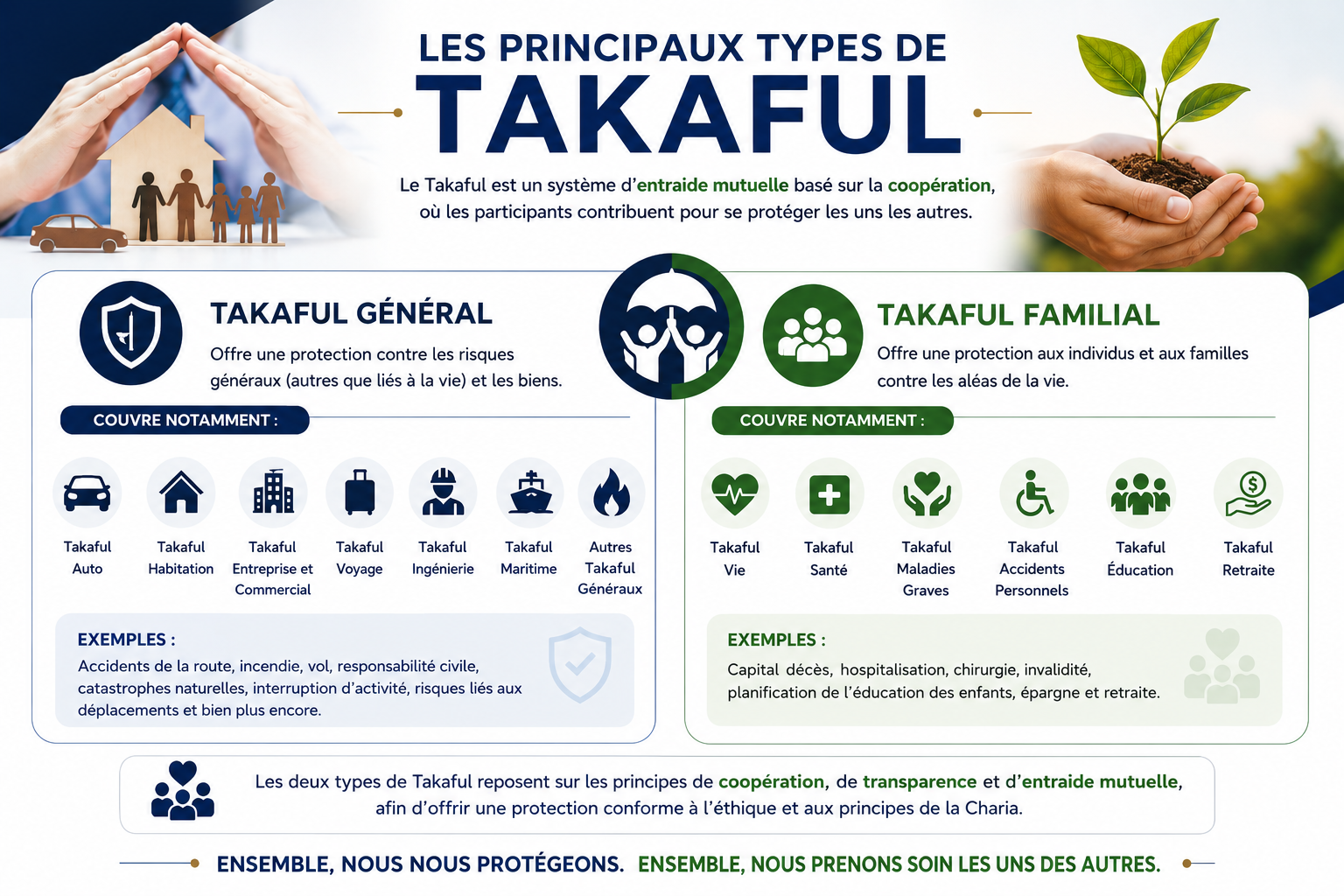
Les principaux types de Takaful : comprendre le Takaful Général et le Takaful Familial
Saviez-vous que le Takaful se divise en deux grandes catégories ? Découvrez les différences entre le Takaful Général …
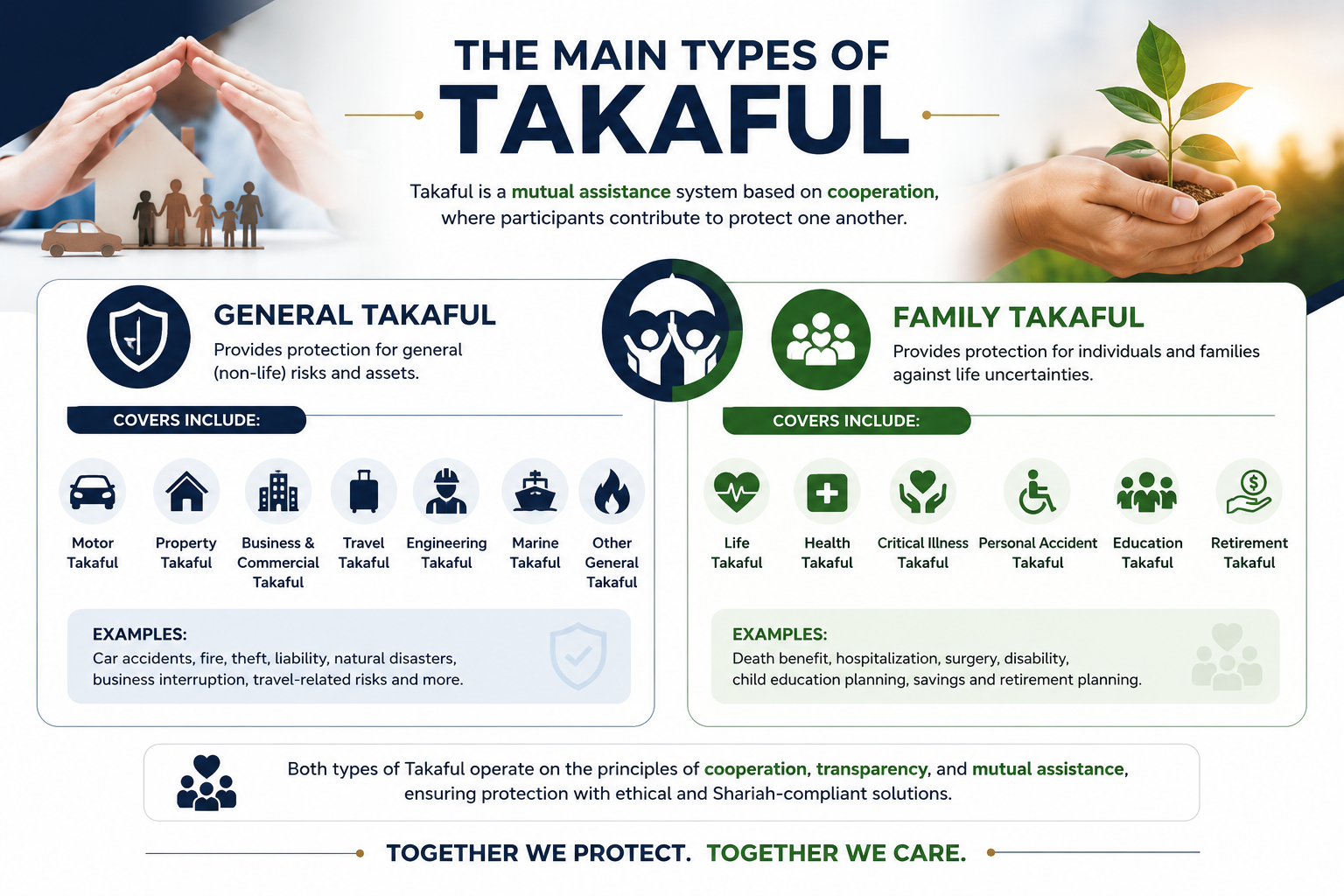
The Main Types of Takaful: Understanding General Takaful and Family Takaful
Did you know that Takaful is divided into two main categories? Learn the difference between General Takaful and …
Pourquoi un assureur agréé choisirait-il de s'associer à un MGA Takaful ? Comprendre la véritable proposition de valeur
Si les assureurs conventionnels comptent déjà des clients musulmans parmi leur clientèle, pourquoi s'associer à un Managing General …