One of the most frequently asked questions about Takaful is whether participants can be asked to contribute a fixed amount to the Participants' Risk Fund and whether that amount can differ from one participant to another.
At first glance, this may seem contradictory to the principle of mutual assistance. If Takaful is based on cooperation, shouldn't everyone contribute exactly the same amount?
The answer is no.
Modern Takaful allows participant contributions to be fixed at the time of quotation and to vary among participants, provided they are determined fairly, transparently, and according to legitimate underwriting and actuarial principles.
Understanding Tabarruʿ
The foundation of every Takaful model is Tabarruʿ, an Arabic term meaning voluntary contribution or donation for the purpose of helping others.
Unlike conventional insurance premiums, which become the property of the insurer, the Tabarruʿ contribution is allocated to the Participants' Risk Fund, a fund collectively owned by the participants.
The purpose of this fund is straightforward: to compensate participants who suffer covered losses.
Every participant joins the Takaful arrangement with the intention of both receiving protection and helping protect others.
Can the Contribution Be Fixed?
Yes.
A Takaful quotation may specify a fixed participant contribution, including a predetermined amount allocated to the Participants' Risk Fund as Tabarruʿ.
However, it is important to distinguish between a contribution that is contractually agreed and one that is imposed.
The participant is not forced to make a donation.
Instead, the participant voluntarily accepts the quotation and agrees that a specified portion of the total contribution will be allocated to the Participants' Risk Fund.
Once the quotation and certificate are accepted, this commitment becomes part of the contractual relationship between the participant and the Takaful operator.
Why "Mandatory Donation" Is Misleading
Some people mistakenly describe the Tabarruʿ contribution as a mandatory donation.
This terminology can create confusion because donations are commonly understood as spontaneous charitable gifts made without contractual obligations.
In Takaful, the participant knowingly agrees to contribute a specified amount as part of joining the mutual protection arrangement.
A clearer description is:
Tabarruʿ Contribution to the Participants' Risk Fund.
This wording accurately reflects both the legal structure and the cooperative nature of the Takaful model.
Can Different Participants Contribute Different Amounts?
Absolutely.
Mutual cooperation does not require identical contributions.
Instead, it requires fairness.
Every participant contributes according to the level of risk introduced into the common fund.
Why Contributions Differ
Just as conventional insurance premiums vary according to risk, Tabarruʿ contributions may also vary based on objective underwriting criteria.
Examples include:
- Type of insured asset
- Coverage limit selected
- Nature of the business
- Property location
- Claims history
- Deductible amount
- Risk classification
- Expected actuarial losses
- Administrative and distribution expenses
These factors ensure that participants contribute proportionately to the risks they bring into the pool.
An Illustrative Example
| Participant | Coverage | Risk Level | Tabarruʿ Contribution |
|---|---|---|---|
| Participant A | $500,000 | Low | $600 |
| Participant B | $500,000 | High | $950 |
| Participant C | $1,000,000 | Medium | $1,100 |
Although all three participants belong to the same Participants' Risk Fund, their contributions differ because the expected risk differs.
This is not discrimination.
It is responsible and actuarially sound risk management.
Transparency Is Essential
One of the defining characteristics of Takaful is transparency.
Participants should understand exactly how their total contribution is allocated.
A quotation should clearly distinguish:
- Tabarruʿ contribution to the Participants' Risk Fund
- Wakalah management fee
- Investment or savings allocation (where applicable)
- Taxes and regulatory charges
This separation helps participants understand where their money goes and reinforces confidence in the Takaful model.
The Role of the Takaful Operator
Another common misconception is that the Takaful operator owns the Participants' Risk Fund.
This is generally not the case.
The operator administers the fund on behalf of participants under an agreed operating model, such as Wakalah or Mudarabah.
Claims are paid from the Participants' Risk Fund—not from the operator's own assets.
Likewise, any underwriting surplus belongs to the Participants' Risk Fund and is managed according to the applicable Takaful rules, regulatory requirements, and certificate terms.
Four Principles Every Contribution Methodology Should Respect
A robust Takaful contribution methodology should satisfy four essential principles.
1. Risk-Based Justification
Differences in contributions should always reflect measurable differences in risk or coverage.
2. Transparency
Participants should clearly understand how their contribution is allocated and how the Participants' Risk Fund operates.
3. Consistency
Participants presenting similar risks should receive similar pricing.
4. Informed Consent
The participant voluntarily accepts the quotation before the certificate becomes effective.
What This Means for Digital Takaful
Modern digital Takaful platforms can automatically calculate participant contributions using underwriting rules and actuarial models while maintaining complete transparency.
Each quotation can display:
- The total participant contribution
- The Tabarruʿ allocation
- The Wakalah fee
- Applicable taxes
- Coverage details
This allows participants to understand exactly how the cooperative model functions before accepting the certificate.
Looking Ahead
As Takaful expands into digital insurance markets around the world, maintaining transparency and fairness will become even more important.
Technology makes it possible to explain contributions more clearly than ever before, helping participants understand not only what they pay, but why they pay it.
This strengthens trust in the system and reinforces the cooperative spirit that lies at the heart of Takaful.
Conclusion
The question is not whether every participant contributes the same amount.
The real question is whether every participant contributes fairly.
A fixed Tabarruʿ contribution may be specified in a quotation, and that contribution may legitimately differ from one participant to another.
What matters is that the methodology is transparent, risk-based, actuarially sound, and accepted by the participant.
That is how modern Takaful successfully combines ethical principles with professional risk management.
Continue Learning
Explore related Iman Risk Solutions pillar pages and structured resources.
Takaful in Canada Start with the principal Canadian guide to Takaful, governance, contributions, and regulation. Takaful Resources Browse structured learning paths covering Takaful fundamentals, funds, governance, and distribution. Islamic Insurance Canada Explore Islamic insurance terminology, Shariah governance, and the Canadian context. Takaful for Brokers Canada Learn about future broker distribution, training, compliance, and digital workflows.Discussion
No comments yet. Be the first to share your perspective.
Join the Conversation
Related Articles
Comment fonctionne une soumission Takaful ? Transparence, équité et clarté à chaque étape
Une soumission Takaful ne devrait pas se limiter à afficher un montant total. Découvrez comment une soumission transparente …
How Takaful Quotes Work: Transparency, Fairness, and No Hidden Fees
Discover how Takaful insurance quotes are built differently — with full transparency, cooperative principles, and no hidden costs. …
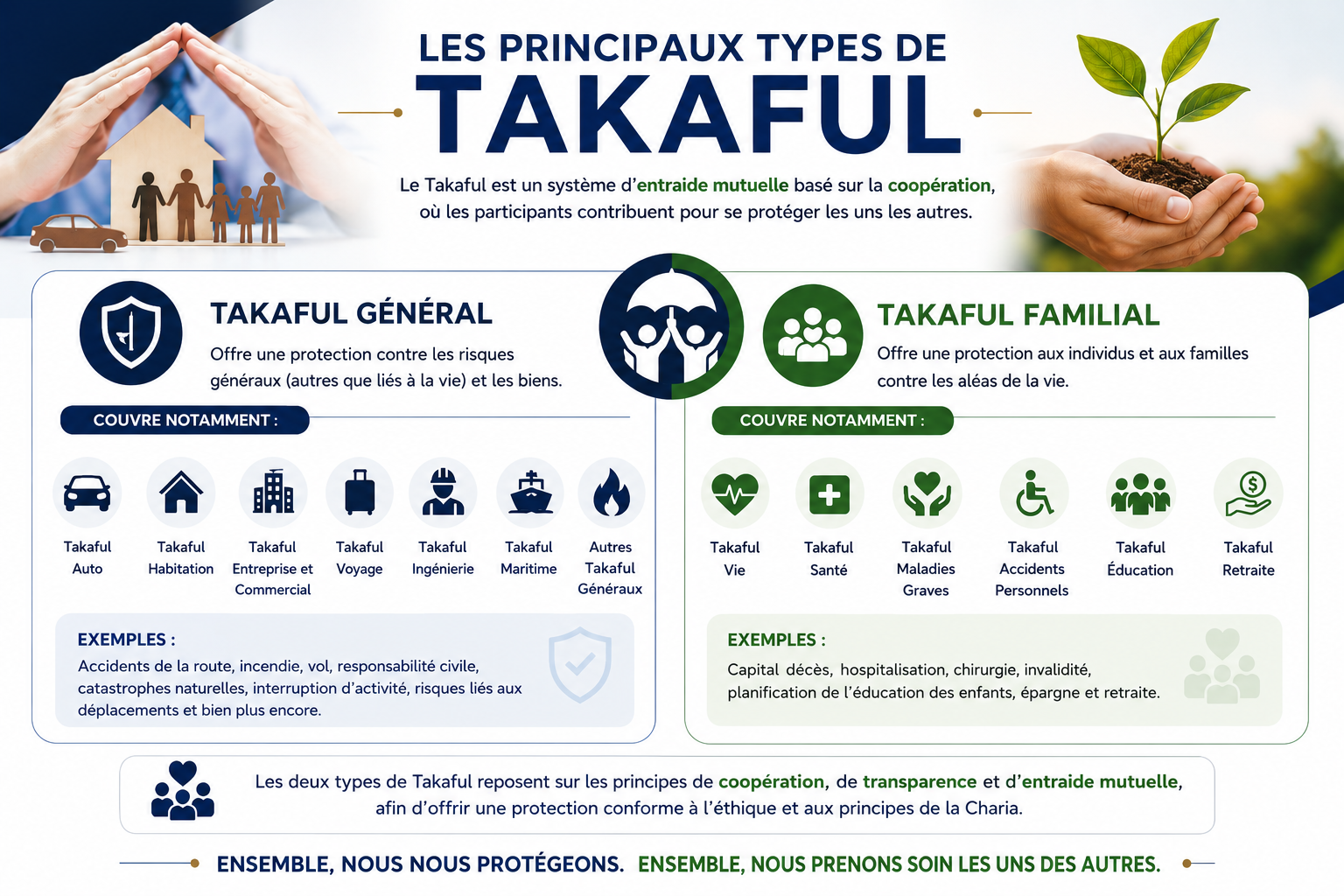
Les principaux types de Takaful : comprendre le Takaful Général et le Takaful Familial
Saviez-vous que le Takaful se divise en deux grandes catégories ? Découvrez les différences entre le Takaful Général …
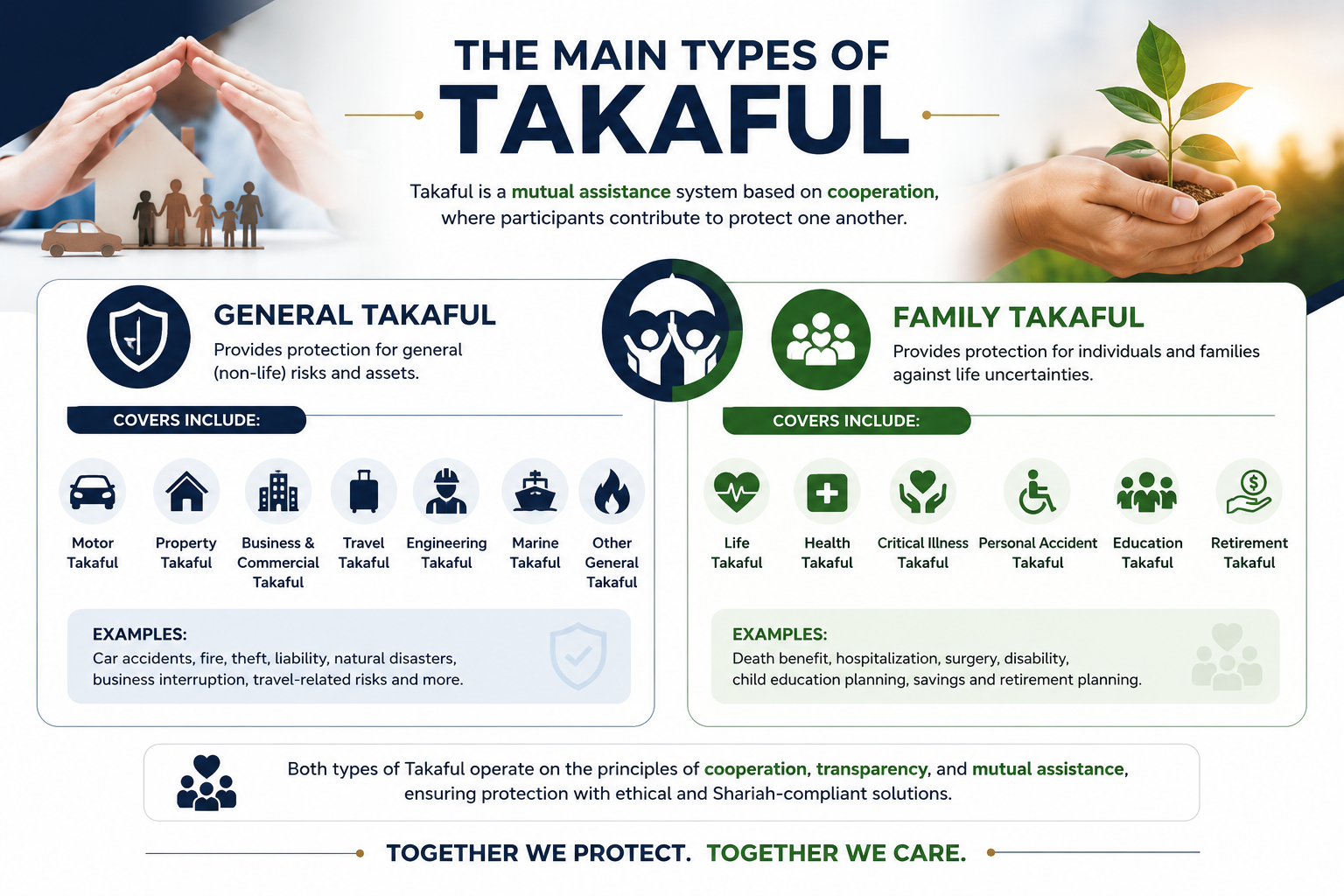
The Main Types of Takaful: Understanding General Takaful and Family Takaful
Did you know that Takaful is divided into two main categories? Learn the difference between General Takaful and …
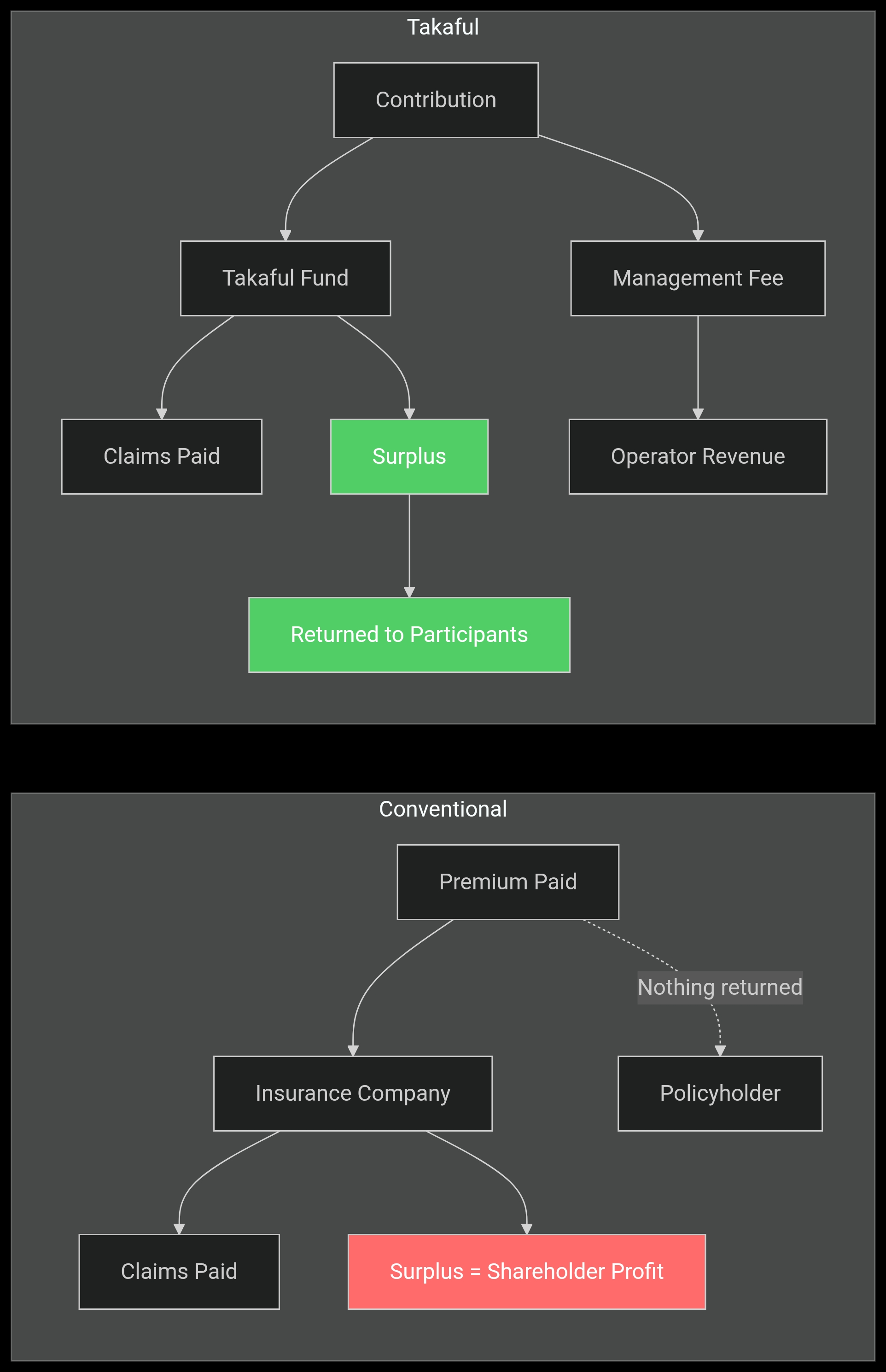
Takaful vs. Conventional Insurance: Where Does the Surplus Go? Understanding the Difference
Discover one of the most important differences between Takaful and conventional insurance: who owns the contributions, how claims …
Les contributions Takaful peuvent-elles être fixes ? Comprendre le Tabarruʿ, la tarification fondée sur le risque et l’équité dans le Takaful moderne
Un opérateur Takaful peut-il fixer à l’avance une contribution de Tabarruʿ ? Les participants peuvent-ils verser des montants …