One of the most fundamental differences between Takaful and conventional insurance is not simply how claims are paid—it is who ultimately benefits when money remains after claims and expenses have been settled.
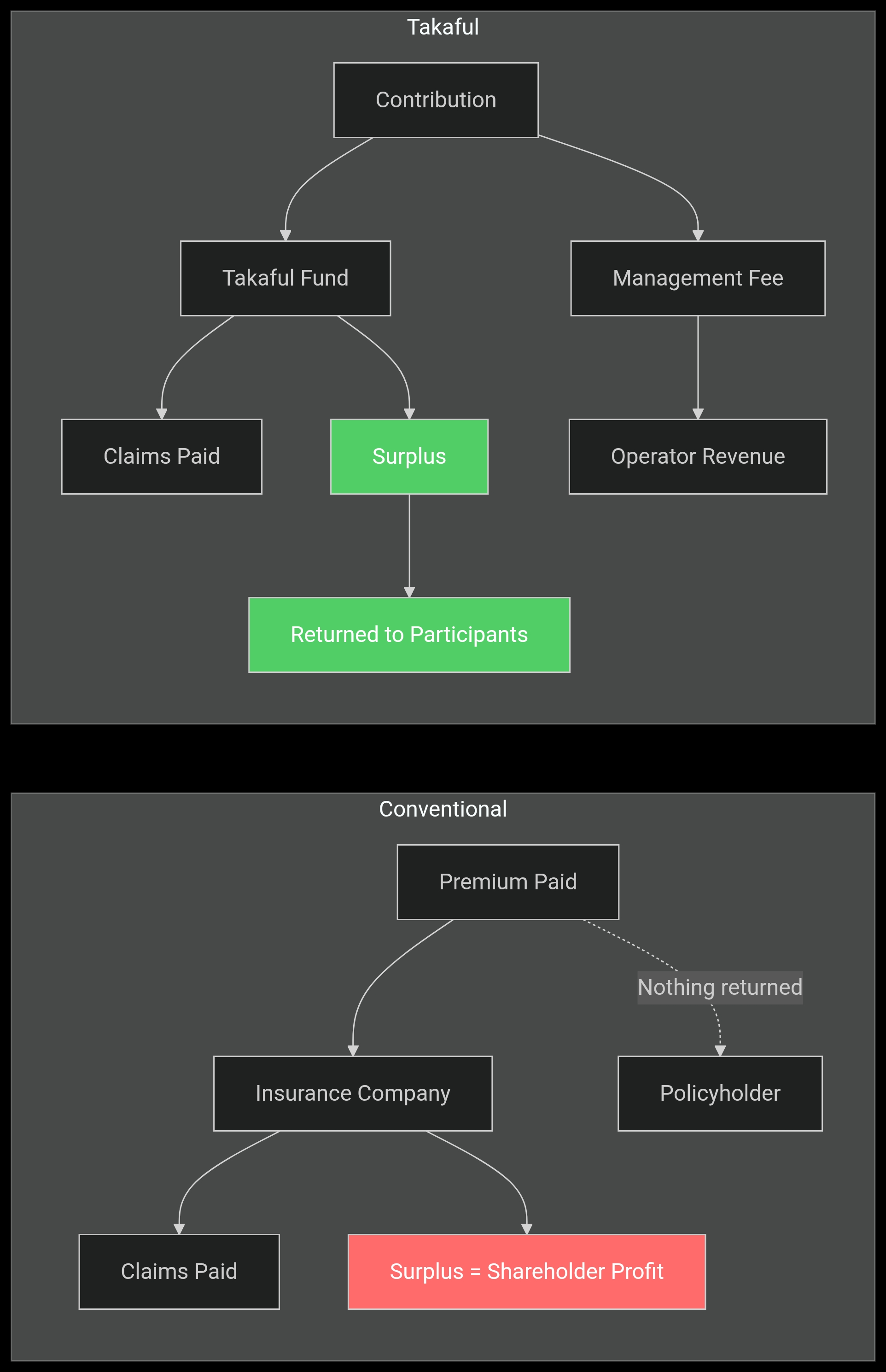
Although both systems aim to protect individuals and businesses against financial losses, they are built on different financial and operational principles. The flowchart below illustrates these differences by following the journey of a participant's contribution from the moment it is paid until the end of the insurance cycle.
The Takaful Model
In a Takaful arrangement, participants make a contribution rather than paying a traditional insurance premium. This contribution is divided into two distinct components.
- The agreed management fee (Wakalah fee), which compensates the Takaful operator for administering the scheme.
- The remaining amount is transferred into the Takaful Risk Fund, which belongs collectively to all participants.
Unlike conventional insurance, the operator does not own the Risk Fund. Instead, the operator manages it on behalf of the participants according to the principles defined by the Takaful contract.
Step 1 – Contributions
Each participant contributes to a common pool designed to protect all members of the scheme. These contributions represent mutual cooperation rather than a transfer of risk to an insurance company.
Step 2 – Management Fee
A predetermined management fee is paid to the Takaful operator. This fee represents the operator's revenue for administering policies, processing claims, managing customer service, ensuring regulatory compliance, and operating the platform.
Importantly, the operator's income does not depend on keeping any surplus remaining in the Risk Fund.
Step 3 – The Takaful Risk Fund
The remaining contributions are placed into the Participants' Risk Fund. This fund is used exclusively for the benefit of participants.
Money from this fund is primarily used to:
- Pay eligible claims.
- Maintain appropriate reserves.
- Ensure the long-term sustainability of the fund.
Step 4 – Surplus Distribution
If, after paying all claims, expenses, and maintaining the required reserves, there is money left in the Risk Fund, this remaining balance becomes surplus.
Rather than becoming profit for the operator, the surplus may be returned to eligible participants, depending on the Takaful model, the certificate terms, and applicable regulations.
This surplus-sharing mechanism reinforces the principles of fairness, transparency, and mutual cooperation that distinguish Takaful from conventional insurance.
The Conventional Insurance Model
In conventional insurance, the customer pays an insurance premium to the insurance company.
Once the premium is paid, ownership of that money is transferred to the insurer. The insurance company assumes the financial risk and becomes responsible for paying covered claims.
Step 1 – Premium Payment
The policyholder pays a premium in exchange for insurance coverage during the policy period.
Step 2 – Company Ownership
The premium becomes an asset of the insurance company. The insurer decides how to invest these funds, manages the associated risks, and uses them to support business operations.
Step 3 – Claims Payment
Claims are paid from the insurer's financial resources according to the policy's terms and conditions.
Step 4 – Remaining Profit
If the total premiums collected exceed claims and operating expenses, the remaining amount becomes part of the insurer's profit.
This profit generally belongs to the company's shareholders and is not returned to policyholders.
Comparing the Two Models
The flowchart highlights the core operational distinction between both systems.
- Takaful: Contributions belong collectively to participants through the Risk Fund.
- Conventional Insurance: Premiums become the property of the insurance company.
- Takaful: The operator earns an agreed management fee.
- Conventional Insurance: The insurer earns profits generated from underwriting and investments.
- Takaful: Any eligible surplus may be returned to participants.
- Conventional Insurance: Remaining profits generally belong to shareholders.
Why This Difference Matters
Understanding where the money goes helps explain why Takaful is often described as a system based on shared responsibility rather than simple risk transfer.
Participants cooperate by contributing to a common fund that protects everyone in the pool. The operator manages the fund professionally, while remaining separate from the ownership of participants' contributions.
In contrast, conventional insurance operates as a commercial agreement in which the insurer assumes ownership of premiums and retains any remaining profits after meeting its contractual obligations.
Conclusion
Both Takaful and conventional insurance provide valuable financial protection and play important roles in modern risk management. However, they differ significantly in how contributions are managed, how profits are generated, and who benefits from any remaining surplus.
For individuals seeking an insurance model built around transparency, mutual cooperation, and ethical financial management, understanding these operational differences is essential.
The accompanying flowchart provides a simple visual representation of these two approaches, illustrating how money moves through each system from contribution or premium payment to its final destination.
Continue Learning
Explore related Iman Risk Solutions pillar pages and structured resources.
Takaful in Canada Start with the principal Canadian guide to Takaful, governance, contributions, and regulation. Takaful Resources Browse structured learning paths covering Takaful fundamentals, funds, governance, and distribution. Islamic Insurance Canada Explore Islamic insurance terminology, Shariah governance, and the Canadian context. Takaful for Brokers Canada Learn about future broker distribution, training, compliance, and digital workflows.Discussion
No comments yet. Be the first to share your perspective.
Join the Conversation
Related Articles
Comment fonctionne une soumission Takaful ? Transparence, équité et clarté à chaque étape
Une soumission Takaful ne devrait pas se limiter à afficher un montant total. Découvrez comment une soumission transparente …
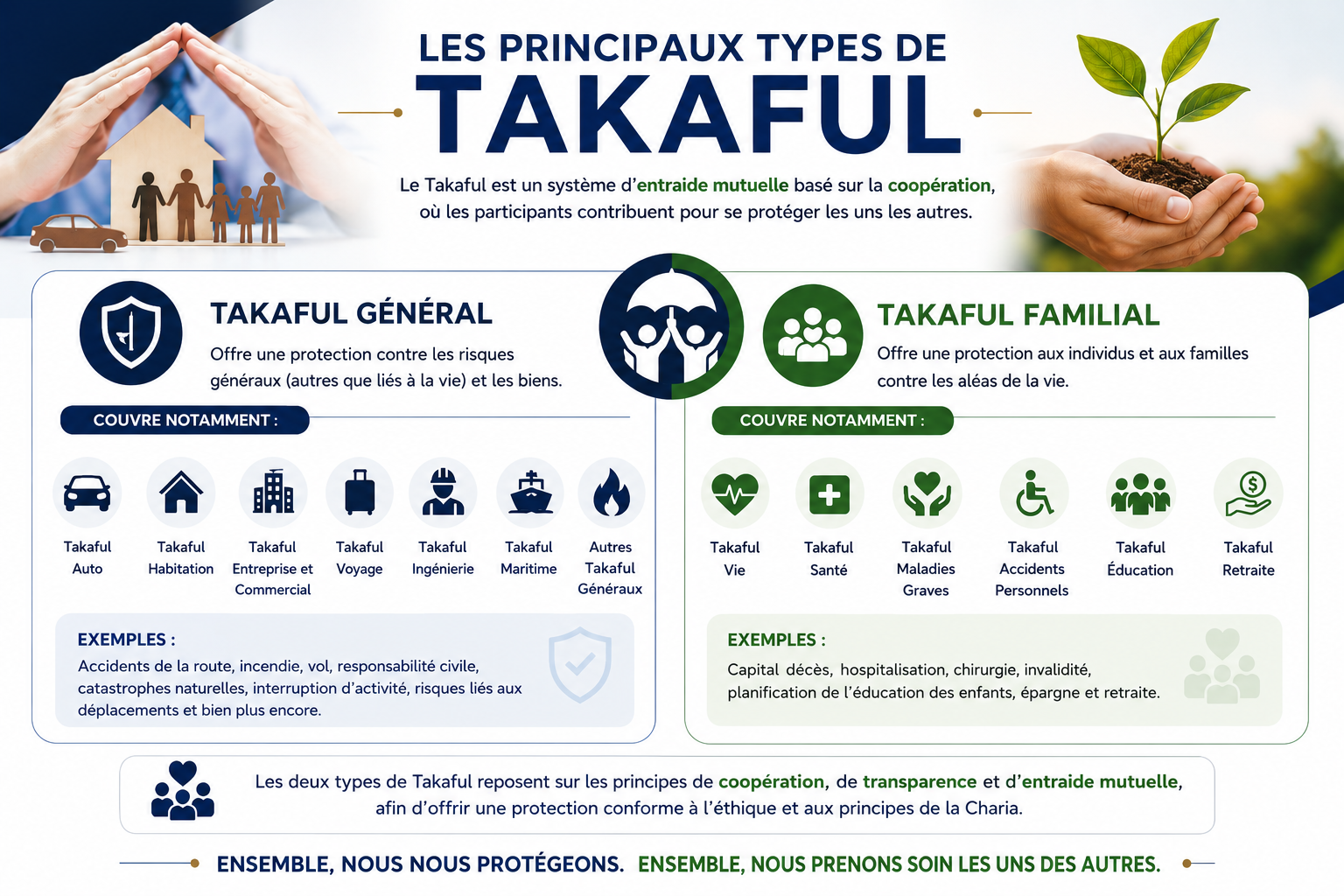
Les principaux types de Takaful : comprendre le Takaful Général et le Takaful Familial
Saviez-vous que le Takaful se divise en deux grandes catégories ? Découvrez les différences entre le Takaful Général …
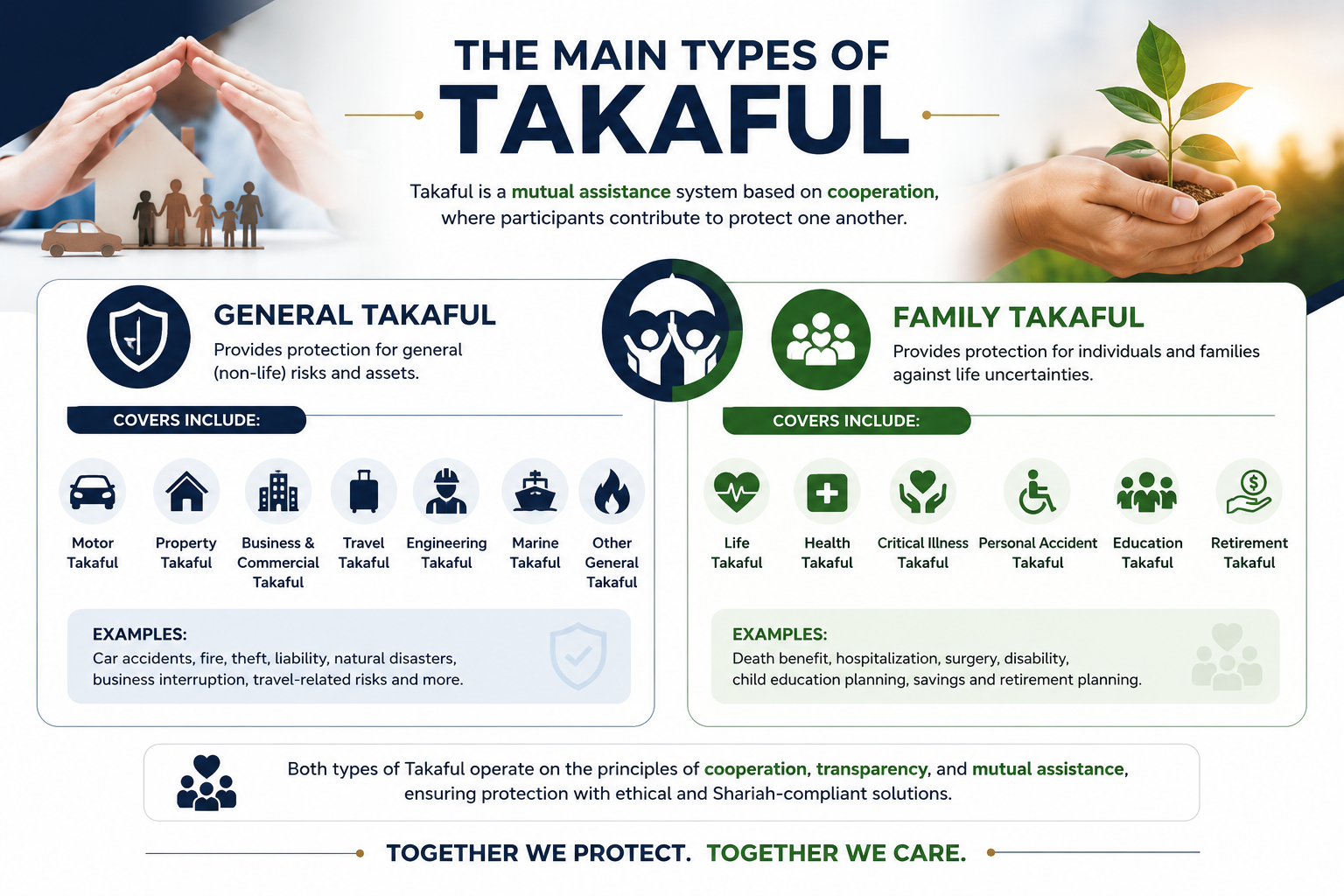
The Main Types of Takaful: Understanding General Takaful and Family Takaful
Did you know that Takaful is divided into two main categories? Learn the difference between General Takaful and …
Pourquoi un assureur agréé choisirait-il de s'associer à un MGA Takaful ? Comprendre la véritable proposition de valeur
Si les assureurs conventionnels comptent déjà des clients musulmans parmi leur clientèle, pourquoi s'associer à un Managing General …
Why Would a Licensed Insurer Partner with a Takaful MGA? Understanding the Real Value Proposition
If conventional insurers already have Muslim customers, why would they partner with a Takaful Managing General Agency (MGA)? …
Can Takaful Contributions Be Fixed? Understanding Tabarruʿ, Risk-Based Pricing, and Fairness in Modern Takaful
Can a Takaful operator specify a fixed Tabarruʿ contribution? Can participants contribute different amounts? Learn how modern Takaful …